
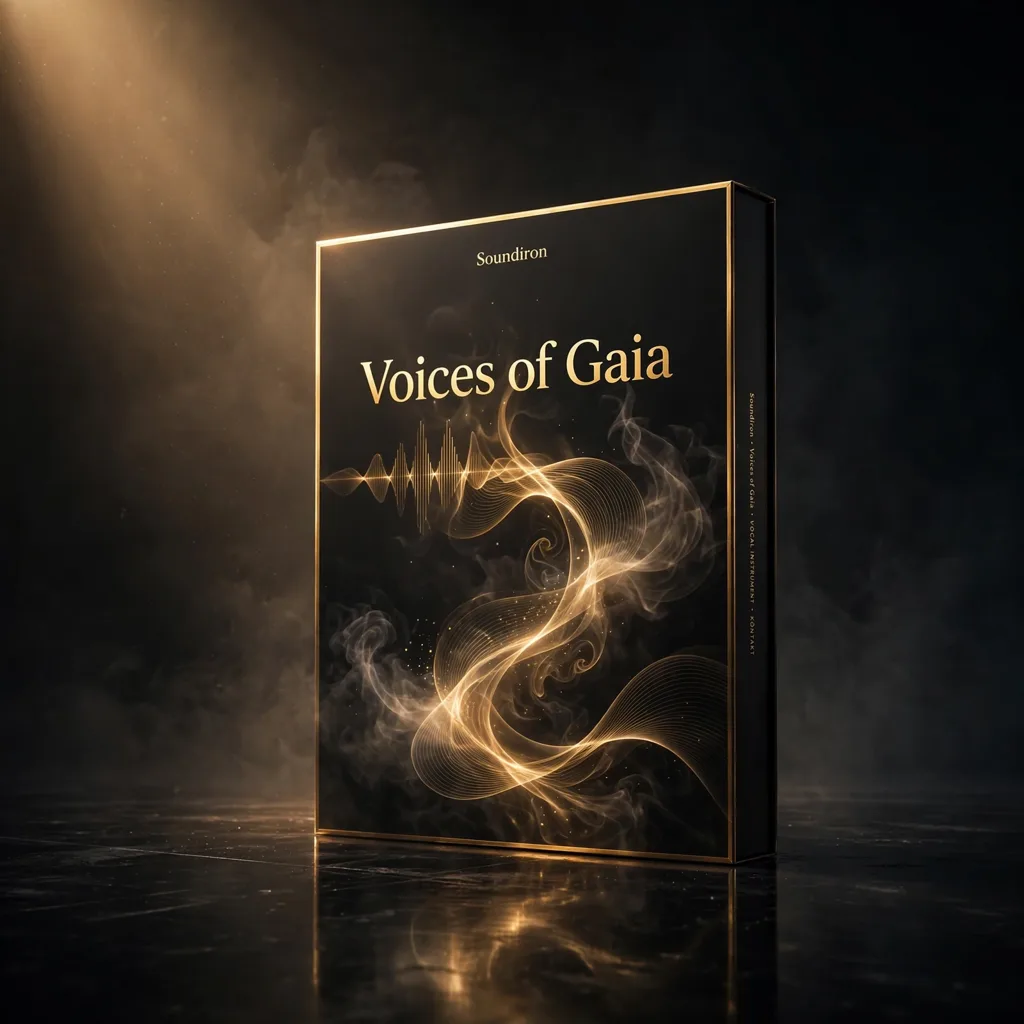


Soundiron Voices Of Gaia Collection – Solo Female Vocal Textures for Film and Ambient Scores
€39.99
A solo female vocal library for Kontakt 5.5 and above, offering sustains, staccatos, whispers, phrases and vocal effects across multiple microphone positions in a 10 GB collection. Ideal for adding an intimate or ethereal human presence to film, ambient and world-influenced scores.
A single human voice can carry a scene that a full orchestra cannot. The Soundiron Voices of Gaia collection is built around a solo female vocalist, recorded in detail for composers who need that direct, emotional presence in film, game, ambient and world-influenced music. Where a choir supplies scale, a soloist supplies character: breath, vulnerability and a melodic identity the audience attaches to a person on screen. This library gives you that voice as an instrument you can play, phrase and process, rather than as a fixed recording you must write around. Its place in a kontaktlibrary collection is clear. It sits between orchestral and textural writing, equally able to state a theme over strings, drift above ambient pads, or whisper at the edge of a cue where music is almost becoming sound design.
Articulations, Scripting and Microphones
The source lists a wide articulation set: long sustains, staccatos, whispers, phrases and vocal effects, supported by advanced scripting for realistic legato transitions, phrase building and nuanced control. Multiple microphone positions, described as close, room and hall perspectives, let you place the singer in the acoustic your arrangement needs rather than accepting a single baked-in space. That distinction matters in scoring. A close perspective keeps a line intimate enough to sit under dialogue, while opening the hall microphones turns the same performance into something ceremonial and distant. The intuitive Kontakt interface described in the source is designed for loading phrases, switching articulations, adjusting mic positions and blending layers, with real-time performance from MIDI controllers. Used carefully, articulation changes automated across a phrase can make a line feel performed across a scene rather than assembled note by note on the piano roll.
Placing a Solo Voice in a Cue
Treat the voice as casting. For a protagonist’s interior moment, begin with whispers or soft sustains at close distance and let the harmony, not the volume, create intensity. For titles, rituals or landscapes, longer sustains and phrases with more hall in the blend give the line a sense of place. Layering is where Voices of Gaia becomes a design tool: multiple phrases combined can suggest a small ensemble or a choir-like atmosphere while retaining a soloist’s grain, and vocal effects can be processed into pads that still carry a human fingerprint. In world and ethnic-influenced writing, the voice can sit alongside plucked instruments and percussion without the formality of a classical choir. In ambient and electronic work, sustained layers work as evolving beds, especially when articulation and microphone balance are automated slowly across a long cue.
Kontakt Version, Size and Compatibility
The source short description gives a library size of 10 GB, and the technical information requires the full retail version of Kontakt 5.5 or higher; this is not presented as a free Player library. Formats run through Kontakt as VST, VST3, AU and AAX, with DAW compatibility including Ableton Live, Logic Pro, FL Studio, Cubase, Pro Tools, Studio One and Reaper. System guidance lists macOS 10.13 or later on Intel or Apple Silicon, Windows 10 or later, a minimum of 6 GB RAM and 16 GB recommended. The content is described as royalty-free for commercial film, TV, games and music. For composers who already write with Kontakt orchestral libraries, Voices of Gaia adds the one element samples often flatten, a recognisable human presence, in a form that can be intimate, ceremonial or otherworldly depending on how you record its space.
In a busy template, organisation matters as much as sound, so save favourite settings as your own starting points and name them by musical job rather than by preset.
That habit keeps the writing moving when picture changes arrive late, because you are choosing from sounds you already trust instead of auditioning from scratch.
Listen at low level as well as at full monitoring volume, since the details that make a cue feel expensive are often the quiet ones underneath the main line.



Reviews
There are no reviews yet.