
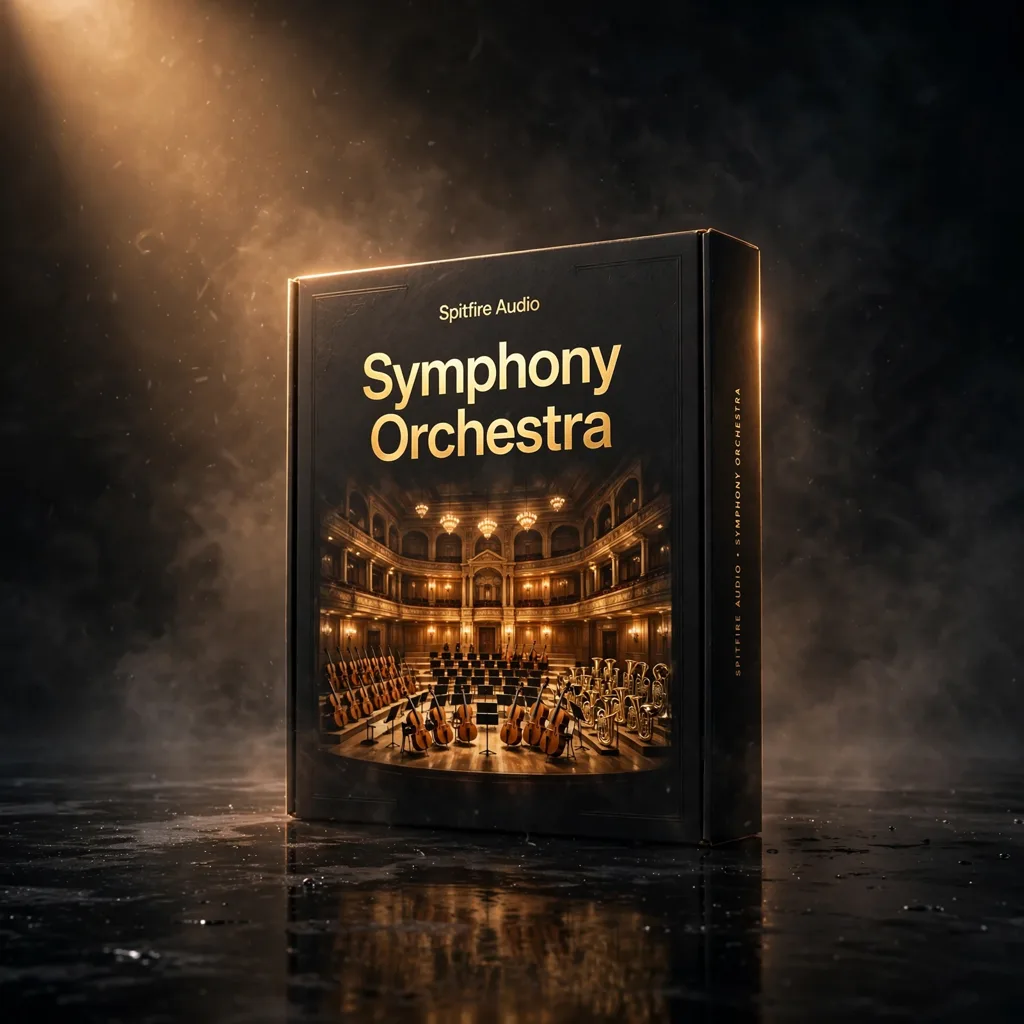
Spitfire Symphony Orchestra — Complete Orchestra Recorded at Lyndhurst Hall
Original price was: €629.00.€49.99Current price is: €49.99.
Spitfire Symphony Orchestra is a 328GB complete orchestra recorded at Air Studios Lyndhurst Hall in London, covering strings, brass, woodwinds, percussion, harp and Steinway grand. Extensive articulations and a shared hall acoustic make it a serious writing tool for film, TV and game scores.
Every orchestral library makes a promise about a room. Spitfire Symphony Orchestra makes it about one room in particular: Lyndhurst Hall at Air Studios in London, where a long list of iconic film scores has been recorded. This is a complete professional symphony orchestra captured in that space, supplied as a 328GB download for Mac and Windows, and organized so that a composer can write for full strings, brass, woodwinds and percussion — plus harp and a Steinway concert grand — without reaching for a different library every time the instrumentation changes.
A Full Orchestra, Section by Section
The strings cover Violins I and II, violas, cellos and double basses, with divisi and chamber configurations for passages that need a smaller, more intimate section. The brass runs from French horns and trumpets through trombones and bass trombone to tuba, in both full-section and solo instruments. Woodwinds include flutes, oboes, clarinets, bassoons and contrabassoon, and the percussion is extensive: timpani, snare, bass drum, cymbals, glockenspiel, marimba, xylophone, vibraphone and harp, alongside the Steinway grand recorded in the same hall. Because everything was captured in one venue, the sections share a common acoustic, so a tutti passage coheres as an orchestra playing together rather than as unrelated samples assembled in a mix.
Articulations for Real Orchestral Writing
Depth of articulation is what separates a writing tool from a sketchpad. String playing techniques include long bows in sul tasto, sul ponticello and ordinario, short bows including détaché, spiccato, staccato and pizzicato, plus harmonics, col legno and tremolo — the vocabulary an orchestrator actually reaches for when a line needs to whisper, bite or shimmer. Brass and woodwinds offer long and short notes, staccato, flutter tongue and multiphonics, giving winds and brass the same expressive range. That breadth is what allows a mockup to carry phrasing: a melody can be shaped with the bowing and tonguing choices a real section would make, rather than sustained at one dynamic until the next cue.
Writing and Mixing in the Hall Sound
The Lyndhurst Hall acoustic is captured in the recordings themselves, so cues arrive with a credible sense of place before any external reverb is considered. For film, television and game scoring — the work this library was plainly assembled for — that saves the familiar struggle of gluing dry samples into a believable space, and it lets mixing decisions concentrate on balance and drama. The library works within the Spitfire Audio plugin ecosystem and alongside any major DAW, and it pairs naturally with hybrid elements when a score moves between orchestra and synthesis. Large templates benefit from generous system resources, which is the honest trade for a library of this scale and detail.
Consider, too, what a single consistent library does for a composer’s writing. When strings, winds, brass and percussion share one hall and one recording philosophy, orchestrational decisions become purely musical: you double a line at the octave because the drama wants it, not because one library’s flutes need help sitting beside another library’s strings. Balances learned on one cue transfer to the next, templates stay stable across a whole production, and the mockup a director approves is the mockup whose balances survive to the mix. That reliability, accumulated over a film or a series, is as valuable as any individual articulation in the collection.
Specifications and Requirements
Spitfire Symphony Orchestra is a 328GB library delivered by download and managed through the free Spitfire Audio app. It runs as a Kontakt Player instrument and supports VST, AU and AAX formats, for Mac and Windows. A minimum of 16GB of RAM is recommended, with 32GB or more ideal for large orchestral template sessions, and solid-state storage — SSD or NVMe — is strongly recommended for streaming performance across the full sample pool. Composers building a long-term orchestral template around a single, consistent hall sound will find the specification straightforward: one library, one room, every principal section covered in depth.


Reviews
There are no reviews yet.