
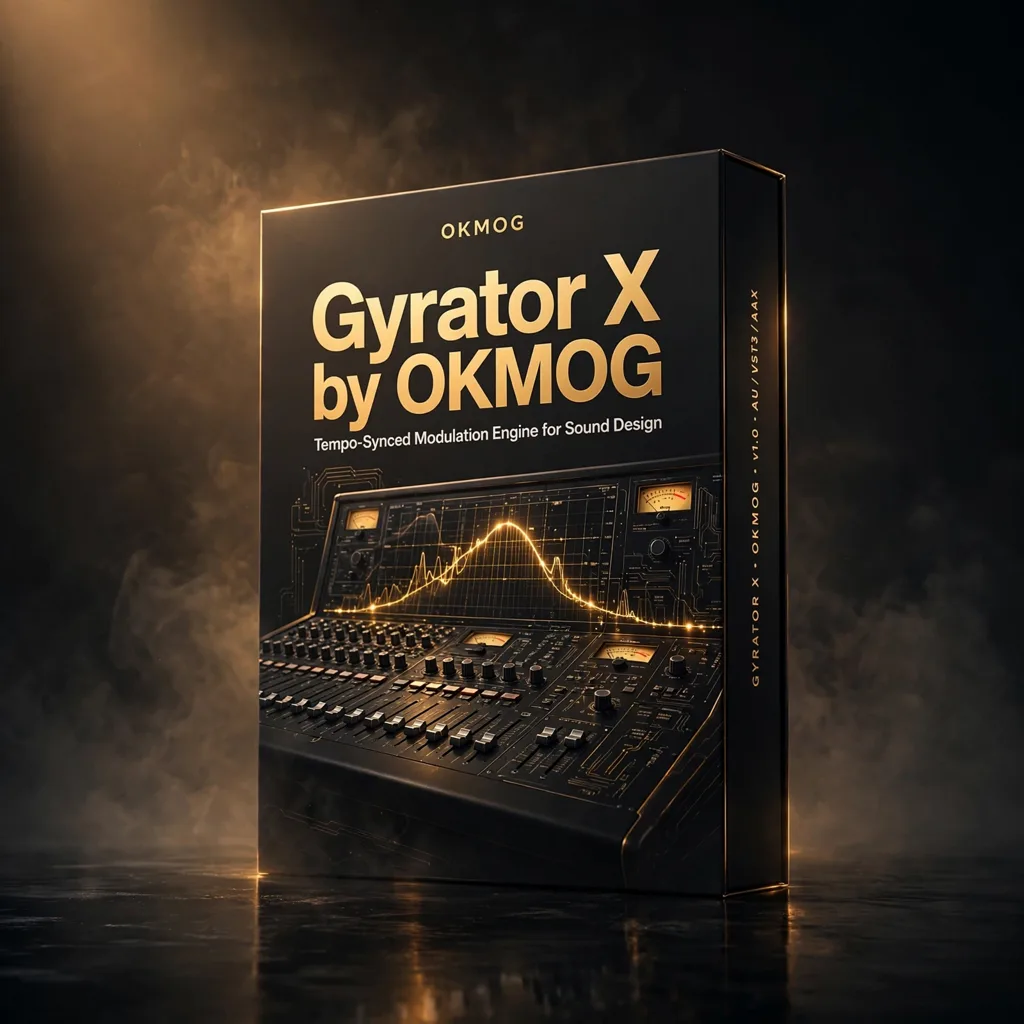

Gyrator X by OKMOG — Tempo-Synced Modulation Engine for Sound Design
€39.99
Gyrator X by OKMOG is a dynamic modulation plugin for Mac and Windows that combines an LFO, an envelope follower and a tempo-synced step sequencer in one engine. Modulate volume, filter, pitch and pan to turn static score elements into living, moving textures.
Static sounds are the enemy of a modern cue. A pad that never moves, a loop that never breathes, a texture that sits exactly where it started — audiences feel the stillness even when they cannot name it. Gyrator X by OKMOG is a dynamic modulation tool built to remove that stillness, combining an LFO, an envelope follower and a step sequencer in a single plugin so almost any parameter of a sound can be set in controlled, musical motion.
Three Modulation Sources, Four Destinations
The engine switches between volume, filter, pitch and pan modulation modes, which between them cover most of the movement a cue ever needs. The LFO offers sine, triangle, square, sawtooth and random waveforms, with rates that lock to DAW tempo for rhythmic work that lands on the grid. The envelope follower takes its instructions from the audio itself, so modulation responds dynamically to the incoming signal level — a swell opens the filter, a hit triggers the movement, and quiet passages settle back down.
The built-in step sequencer adds the third behaviour: rhythmically timed modulation patterns, synchronised to the session, that repeat with intent. Modulation depth is adjustable for every source, from a barely-there shimmer to full rhythmic gating, and smooth parameter interpolation keeps every change zipper-free, so the audio stays clean even while parameters are being automated live in front of you.
From Underscore Detail to Full Sound Design
The obvious applications are electronic: rhythmic volume gating on drums for the modern pumping effect, animated filter movement on synth pads for evolving organic textures, sequencer patterns that bring static loops to life. The scoring applications are subtler and just as valuable. A tremolo-like volume pattern can give a sustained string texture a pulse that matches the edit. Envelope-followed filter movement makes a drone react to the hits it accompanies. Pan modulation drifts a texture across the image so a wide shot feels restless without a single new note being written.
Sound designers working in film and game audio will find the combination genuinely open-ended: LFO, envelope and sequencer sources can be layered into modulation chains of real complexity, applied to pads, guitars, drums and full mix buses alike. Because the processing is tempo-aware, the results stay musical inside a cue rather than drifting into effect-for-effect’s-sake territory, and because depth is always under your control, the line between underscore and sound effect stays exactly where you put it.
Facts and Compatibility
Gyrator X supports VST3, AU and AAX formats and runs on macOS 10.13 or later and Windows 10 or later, working with Ableton Live, Logic Pro, FL Studio, Pro Tools, Cubase and all major DAWs. Documented features include the dynamic modulation engine, volume, filter, pitch and pan modes, five LFO waveform shapes, an input-responsive envelope follower, a tempo-synchronised step sequencer, per-source depth control and smooth, zipper-free parameter interpolation. Delivery is instant, with licence and installer supplied immediately after purchase. If your cues feel finished but not alive, Gyrator X is the movement they are missing.
Used at low depth, Gyrator X also solves a mixing problem that has nothing to do with effects: masking. Sustained elements that occupy the same register — pads, string sustains, synth beds — blur into one another when they are all equally loud all the time. Slow, shallow volume or filter movement, offset between layers, gives each element moments of prominence, so the ear separates them without any fader automation being written. It is arrangement by motion, and in underscore, where harmony may hold for minutes at a time, it is often what keeps a static cue feeling composed rather than looped.
Related products

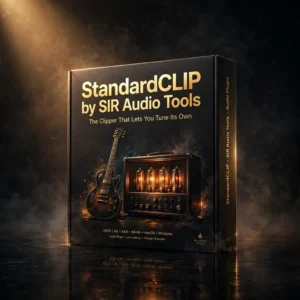
StandardCLIP by SIR Audio Tools — The Clipper That Lets You Tune Its Own Oversampling
Most clippers hide the filtering that decides whether clipping sounds like loudness or like distortion. StandardCLIP exposes it: oversampling up to 256x, linear- or minimum-phase filters you can tune yourself, a variable clip shape, and an assistant that measures your loudest passage and sets safe output gain.




Reviews
There are no reviews yet.